
Home / Guides / Shipping Furniture from China
Shipping furniture from China: markets, consolidation and safe delivery
Sourcing dining sets, sofas, or hotel fit-outs in Foshan, Lecong, or Shunde is straightforward until you have eight different workshops to coordinate. This guide covers warehouse consolidation, export crating, volume management, customs rules, and residential delivery.
The Foshan and Lecong sourcing reality
The Pearl River Delta around Foshan, Lecong, and Longjiang represents the largest furniture manufacturing and wholesale cluster in China. Buyers frequently furnish an entire home, villa, restaurant, or boutique hotel in a single buying trip. However, almost nobody buys every item from one manufacturer.
A typical order might include dining chairs from one factory, a marble-top table from a stone workshop, sofas from an upholstery specialist, and bespoke cabinetry from a millwork producer. Each workshop operates on its own production timetable, packages items according to its own domestic habits, and expects the buyer to collect goods at their loading bay the day production finishes.
Managing eight separate export shipments would create eight sets of export documentation, eight terminal handling fees, and multiple customs clearance entries at destination. The standard operational solution is consolidation into a single warehouse before ocean loading.
Consolidation warehouse operations: step by step
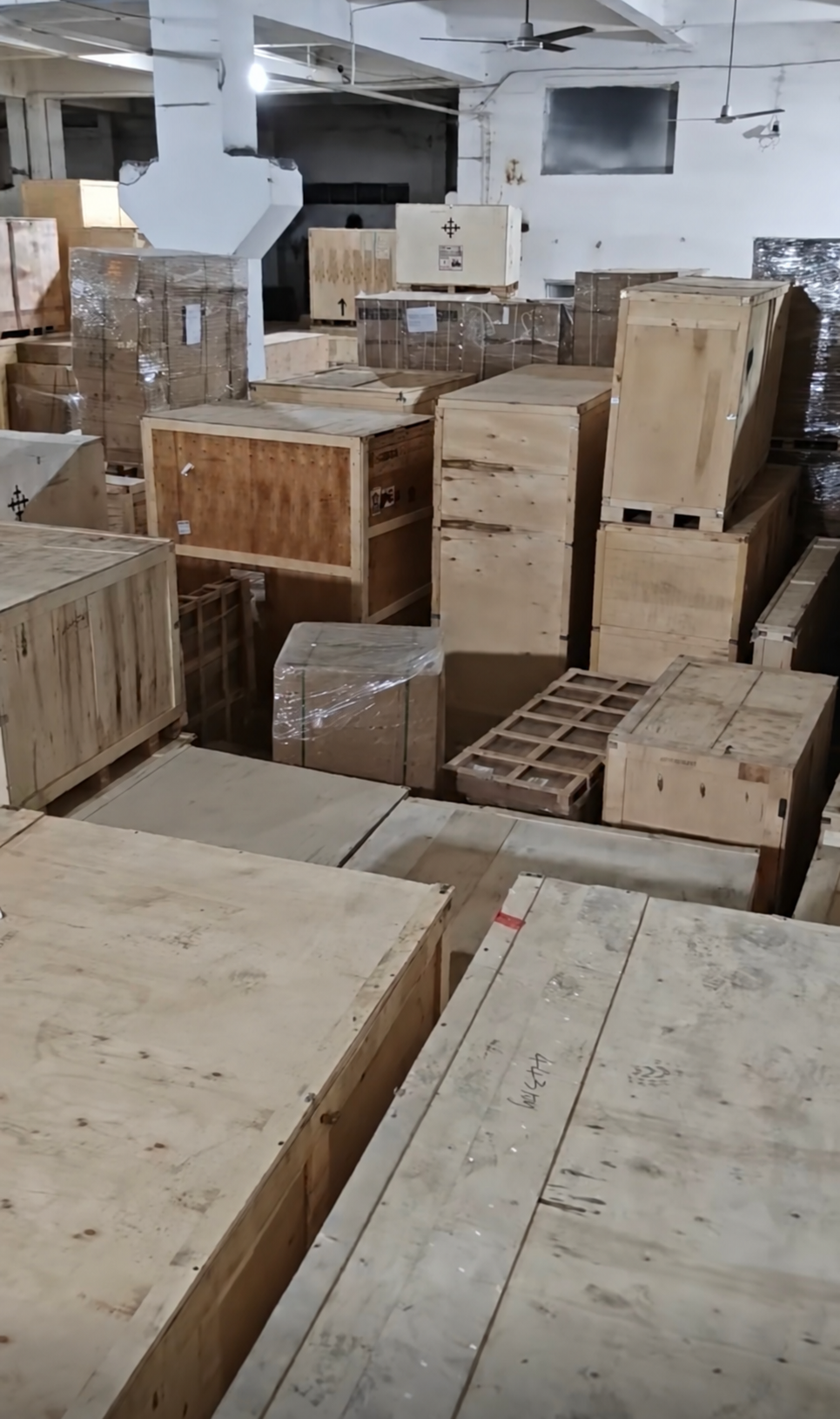
A consolidation warehouse acts as your physical buffer and quality checkpoint in China. Rather than rushing containers from factory to factory on tight loading schedules, each vendor delivers to our local facility.
| Operational Step | What Happens at the Warehouse |
|---|---|
| Vendor coordination | Collecting delivery schedules and cargo readiness notes from each factory or showroom before dispatching trucks. |
| Receiving & inspection | Unloading at our warehouse, checking outer packaging, inspecting for corner impacts or tears, and logging piece counts. |
| Label matching | Verifying shipping marks and item codes against purchase orders so items from different vendors do not get mixed up. |
| Re-packaging & crating | Reinforcing weak factory cartons, adding corner protectors, and building plywood crates around marble, glass, and delicate timber. |
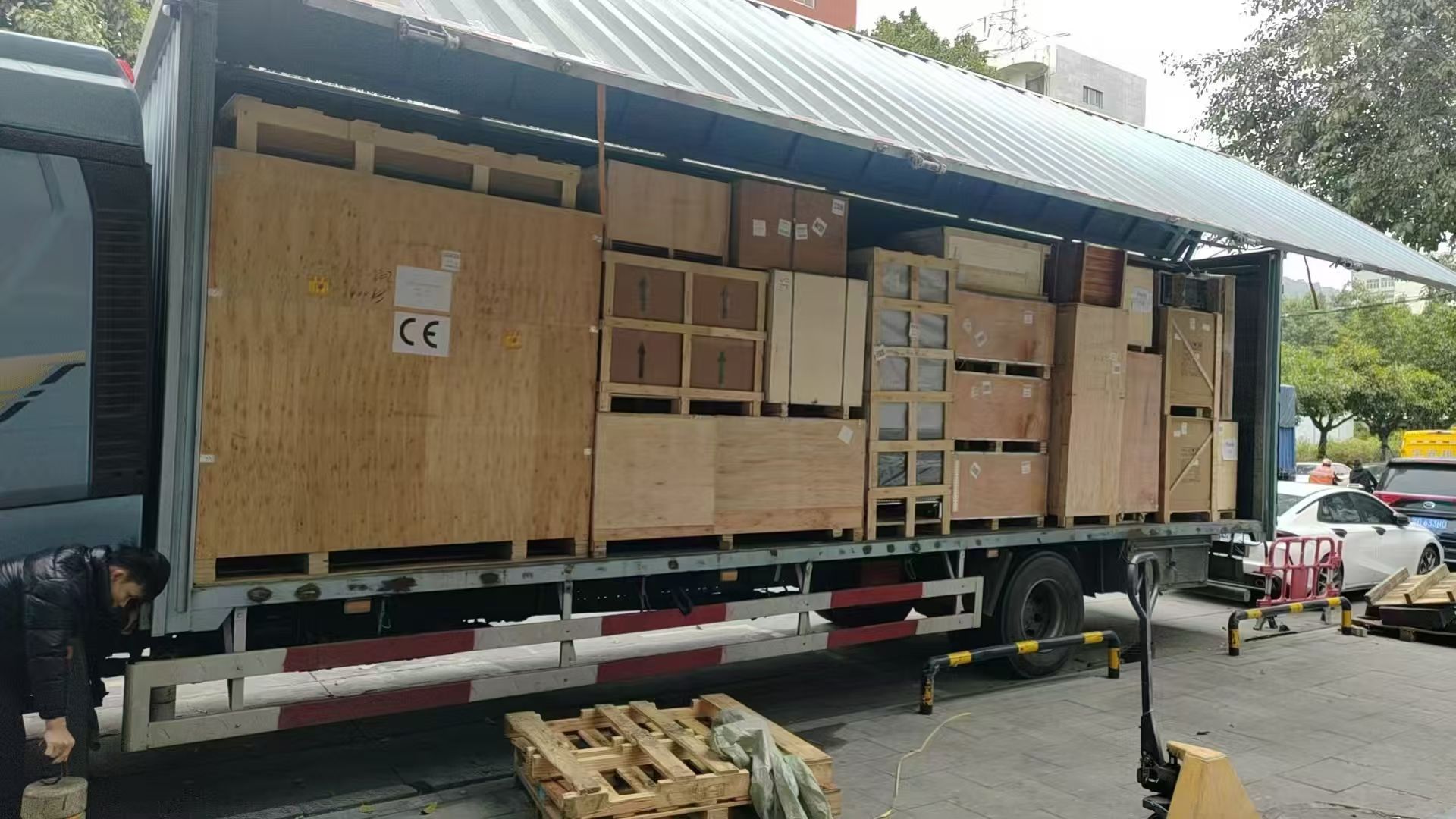
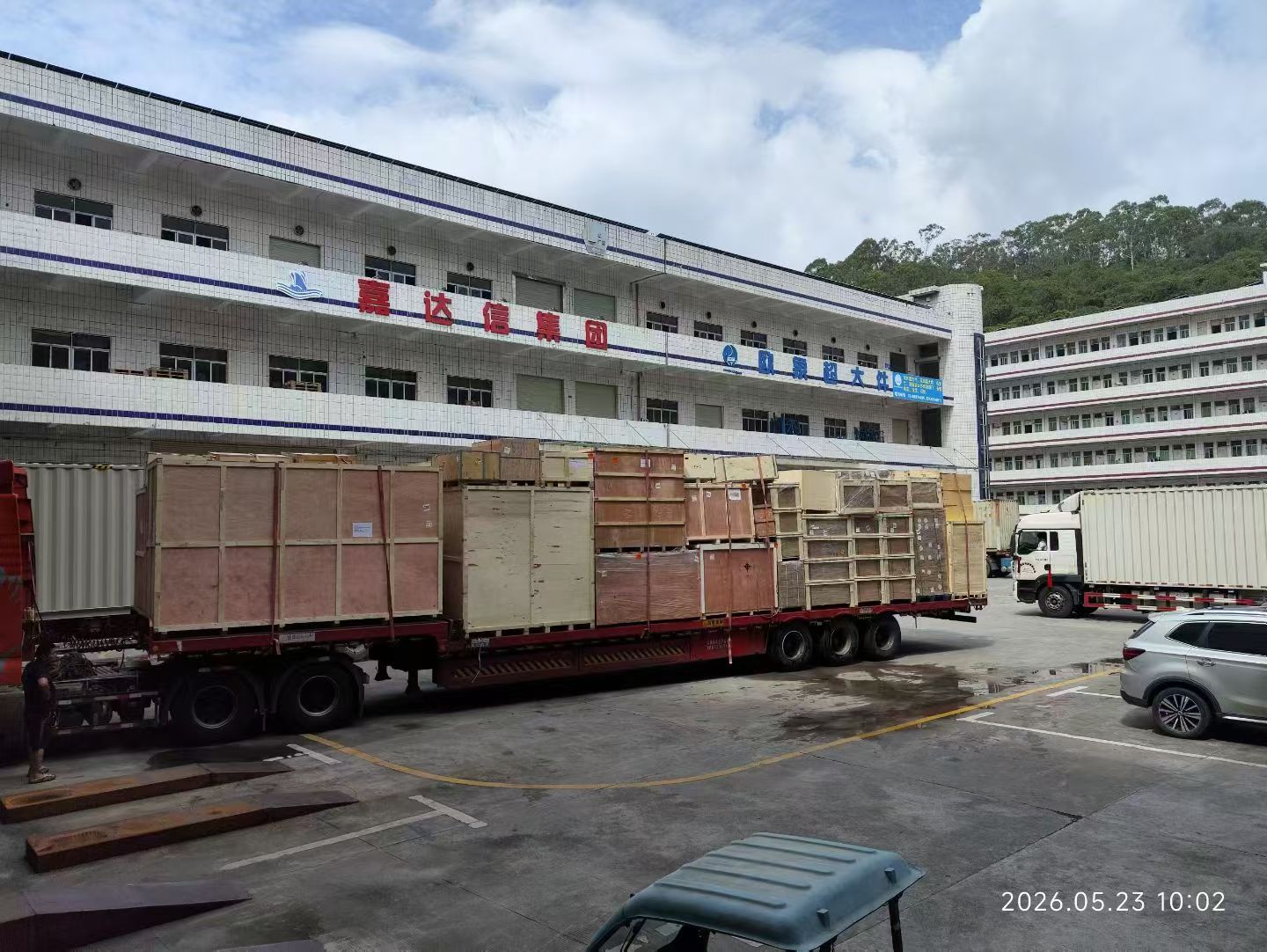
| Container stuffing | Arranging heavy items at the base, loading flat-packs securely, and bracing assembled pieces so cargo cannot shift at sea. |
Opening cartons to inspect delicate lacquer finishes or upholstery seams takes minutes at an origin warehouse. Fixing a scratch or reordering a damaged table leaf while the supplier is a local truck drive away costs a fraction of attempting a replacement once the container arrives across an ocean.
Packaging standards: cartons, EPE foam and export crates
Domestic Chinese furniture packaging is designed for short truck journeys on smooth roads, often consisting of thin three-ply cardboard with minimal padding. Ocean freight involves vessel vibration, humidity shifts, and container drayage.
- Five-ply or seven-ply corrugated cartons: Outer master cartons must withstand stacking forces without buckling under the weight of higher tiers.
- Corner and edge protection: Solid EPE (expanded polyethylene) foam blocks or heavy-duty compressed paper angle boards protect vulnerable corners on timber tables, credenzas, and cabinet doors.
- Moisture barrier and desiccant bags: Marine containers experience condensation cycles during ocean transit. Polyethylene film wrapping and silica gel packets inside cartons protect solid timber from warping and upholstery from mildew.
- Plywood crates for fragile elements: Marble table tops, tempered glass panes, large mirrors, and delicate carved components require rigid external crates.
For wooden crating, remember the international phytosanitary rules: crating made entirely from processed wood such as engineered plywood, OSB, or hardboard is completely exempt from fumigation. If solid sawn timber runners or framing are used, they must be heat-treated and stamped in accordance with ISPM-15. Read our dedicated guide on ISPM-15 wooden crates and heat-treatment rules for details.
Volume calculation: flat-pack vs. assembled CBM
In ocean freight, space is money. Ocean carriers price container space by volume, and furniture is characteristically voluminous relative to its actual weight.
| Packaging Format | Freight Efficiency | Destination Practicality |
|---|---|---|
| Flat-pack (Knock-down) | Minimal dead space; dense packing | Assembly required on site; risk of missing hardware packets if boxes tear |
| Semi-assembled | Key frames built; legs or fragile fittings packed separately | Balanced trade-off between ocean freight volume and destination assembly time |
| Fully assembled | Ready to place immediately on arrival; sturdy factory build | High volume expansion; empty internal voids consume ocean container space |
An assembled dining chair occupies roughly 0.35 to 0.45 CBM because you are paying to ship empty air between its legs and above the seat. The same chair designed as a knock-down unit packs into 0.08 to 0.12 CBM. When specifying designs with Chinese manufacturers, request knock-down packaging wherever practical.
LCL vs. FCL: the furniture crossover rule
When you only have a few items, Less-than-Container Load (LCL) consolidation appears economical on surface freight rates. However, furniture faces unique risks in common co-loading environments:
- Multiple re-handling touches: LCL freight is handled at origin CFS (container freight station), stuffed into a shared box, unstuffed at destination, and moved through regional warehouses. Each handling step increases exposure to impact.
- Incompatible neighbour cargo: In an LCL container, your velvet sectional or delicate lacquered sideboard might share space with steel pipes, chemical drums, or heavy machinery skids.
- The volume tipping point: Because standard 20-foot containers accommodate 28 to 33 usable cubic metres, and LCL involves origin and destination CFS handling fees per CBM, the overall cost tipping point for furniture typically sits around 13 to 15 CBM.
Once your cargo reaches 14 CBM, booking an exclusive 20-foot full container (FCL) is frequently comparable in total cost while providing complete security: your cargo is loaded once at the warehouse, sealed with an official bolt seal, and only opened at your premises. For a detailed breakdown of this calculation, consult our guide on how the FCL or LCL decision is made.
Customs classification, HS codes and tariff considerations
Furniture is classified under Chapter 94 of the Harmonized Tariff Schedule (HTS). Accurately identifying materials and intended applications is essential for correct entry filing:
- 9401: Seats (upholstered chairs, wooden frames, metal frame chairs, swivel chairs).
- 9403: Other furniture and parts (wooden bedroom furniture, wooden dining room tables, metal office furniture, plastic furniture).
- 9404: Mattress supports, mattresses, quilts, and cushions.
Special trade remedies and duty layers must be monitored prior to shipment. For example, imports of wooden bedroom furniture into the United States from China have long been subject to significant Anti-Dumping Duty (ADD) orders, requiring specific non-market economy case filings unless the supplier holds an established separate rate. Additionally, Section 301 tariffs apply to many Chinese furniture categories entering the US.
In Europe and the UK, standard customs duty rates apply alongside destination VAT (Value Added Tax). Always ensure your commercial invoice separates item values by material composition. To understand how these charges compound into your final financial outlay, review our import duty and landed cost guide.
Final delivery: commercial dock vs. residential address
The final mile represents the stage where most logistics misunderstandings occur. Commercial freight is quoted by default under dock-to-dock assumptions: transport via full-length articulated lorries delivering to standard commercial loading docks with forklifts and receiving staff on duty.
Delivering furniture to a private residence, villa, or city-centre premises requires specific accessorial services:
- Hydraulic liftgate service: Standard container chassis and line-haul box trucks do not carry ramps or tail lifts. If you do not own a forklift or a raised dock, a truck equipped with a hydraulic liftgate is necessary to lower heavy pallets to ground level.
- Truck size and street restrictions: Many residential neighbourhoods prohibit long 40-foot or 53-foot articulated lorries due to tight cul-de-sacs, low-hanging tree branches, or local municipal weight restrictions. Delivery may require cross-docking onto a smaller straight truck.
- White-glove inside placement: Standard freight delivery is curbside or threshold: the driver rolls the pallet onto your driveway or pavement and departs. If you need two workers to unpack crates, carry a 150 kg dining table up internal stairs, and remove packing debris, white-glove service must be booked prior to arrival.
For practical guidance on selecting between liftgates, forklifts, and unloading teams, refer to our guide on unloading and last-mile delivery options.
Pre-shipment buyer checklist
Before transferring final balance payments to your furniture suppliers, confirm these key items:
- Collect itemised packing lists showing carton dimensions, net weight, gross weight, and CBM per piece.
- Ensure all suppliers mark each carton with your unique consolidation reference number and item codes.
- Confirm whether any wooden framing uses solid timber requiring ISPM-15 treatment stamps, or processed plywood.
- Review high-resolution photos of outer cartons and protective crating taken upon warehouse receipt.
- Confirm your destination site conditions: street clearance, loading dock availability, and whether liftgate or inside delivery is required.
Furnishing a project with pieces from multiple suppliers?
Send us your supplier list and itemised packing notes — we consolidate your cargo in Foshan and coordinate safe delivery to your door.